Embroidery machines bring creativity and precision to home sewing, allowing hobbyists and professionals alike to transform plain fabrics into personalized works of art — monograms, custom patches, decorative motifs, and more. With so many models on the market, choosing the right embroidery machine can feel overwhelming. That’s why we’ve selected five top-performing machines — a mix of well-known brands and newer options — to highlight as the current “best of the best.” Whether you’re a beginner starting out or an experienced stitcher aiming to upgrade your setup, this guide helps you navigate key features such as built-in designs, hoop size, sewing versatility, and overall ease of use.
5. Brother SE700
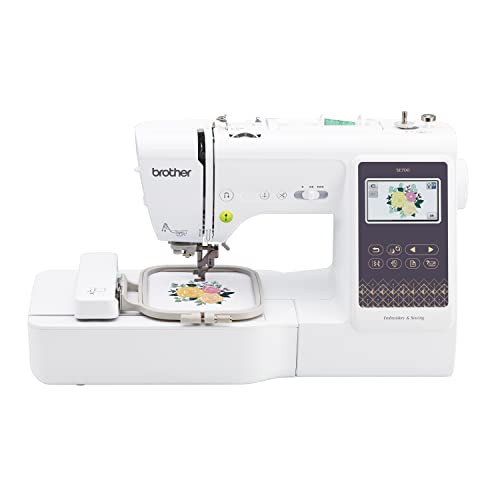
The Brother SE700 is a combo sewing and embroidery machine that delivers excellent versatility in a compact package. It features a 4″ × 4″ embroidery field — sufficient for monograms, small patches, or decorative motifs — and offers 135 built-in embroidery designs plus 10 embroidery fonts.
Switching between sewing and embroidery is easy, and the machine includes over 103 built-in stitches along with 10 one-step auto-size buttonhole styles. Its 3.7″ touchscreen lets you preview and edit designs before stitching, which is a great advantage especially for those new to embroidery.
Another highlight is its wireless LAN connectivity — you can transfer embroidery files from your PC via the free “Design Database Transfer” software, or use the USB port. For users who want a combination of sewing and embroidery without needing multiple machines, the SE700 offers a balanced, beginner-friendly way to start.
Its modest hoop size might feel limiting if you want large designs — but for small projects, patches, or customising clothes, it remains a solid, dependable choice.
4. POOLIN EOC06

The POOLIN EOC06 is a relatively new entrant among home embroidery machines, offering a good balance of features for its price and appealing to hobbyists who want fun customization options. While it doesn’t yet have the premium brand history of some legacy machines, it aims to deliver ease of use and sufficient functionality for home embroidery projects.
This model’s strengths lie in straightforward operation and practicality: it’s designed to handle small- to medium-sized embroidery tasks — things like patches, small logos, decorative items, or gift personalization. For someone just starting or for occasional embroidery projects, the POOLIN EOC06 provides an accessible entry point without overwhelming complexity.
Though it may lack some of the advanced functions (like huge hoop sizes, extensive stitch libraries, or brand-integrated design platforms) seen in premium machines, the trade-off is its affordability and simplicity. For hobbyists or occasional crafters, the POOLIN EOC06 is a sensible choice: you get the core embroidery functions without investing too heavily upfront.
If you are exploring embroidery for the first time or working on occasional custom projects — rather than heavy quilting or professional-level embroidery — POOLIN EOC06 can give you a gentle introduction to the craft.
3. SINGER 9960

The Singer 9960 (Quantum Stylist 9960) is primarily known as a sewing machine — but thanks to its versatility and feature set, many users adapt it for embroidery or decorative stitchwork, especially when combined with a separate embroidery module or specialized feet. It boasts a substantial 600 built-in stitches, including decorative, stretch, and quilt-ready patterns, giving you vast creative flexibility.
Beyond stitch variety, the 9960 includes 13 one-step buttonhole styles, multiple presser feet, an automatic needle threader, and a top drop-in bobbin — all features that improve speed and convenience. Its robust motor can handle heavy fabrics like denim, canvas, or upholstery materials, making it a strong contender for sewing projects that demand more power.
For those interested in embroidery — or decorative stitching — the 9960’s stitch library and stability make it capable. However, it lacks a built-in embroidery hoop system or dedicated embroidery arm (as found in “combo” or “embroidery” machines). That said, for someone who primarily sews but occasionally wants decorative stitching — or combines patch-sewing and applique — the Singer 9960 delivers reliable quality and breadth of function.
Overall, the Singer 9960 is best suited to sewists who value versatility, heavy-duty sewing capabilities, and occasional decorative work — rather than dedicated, high-detail embroidery.
2. Brother LB5500

The Brother LB5500 sits a notch above typical entry-level machines, providing embroidery features aimed at users who want a balance between performance and value. While not as heavy-duty or feature-packed as top-end commercial machines, the LB5500 is designed to serve home embroiderers, hobbyists, and small-business craftspeople who want reliable embroidery without excessive complexity.
Its construction emphasizes ease of use and practical embroidery tasks — such as customizing garments, creating patches, or personalizing home décor — rather than industrial-scale projects. The LB5500 typically supports standard embroidery hoops and works well for small-to-medium sized designs, making it a step up from very basic models while remaining manageable for home users.
For someone who seeks a machine that feels more “grown-up” than a beginner model but doesn’t carry the bulk, noise, or cost of a full commercial machine, the Brother LB5500 hits a sweet spot. It balances user-friendliness, affordability, and functionality, making it a solid “mid-tier” choice for dedicated hobbyists or small-batch creators.
It’s especially suitable if you’re doing repeated embroidery work (for instance, customising clothes or accessories) and want a reliable, consistent machine without overpaying for features you won’t use.
1. POOLIN EOC05
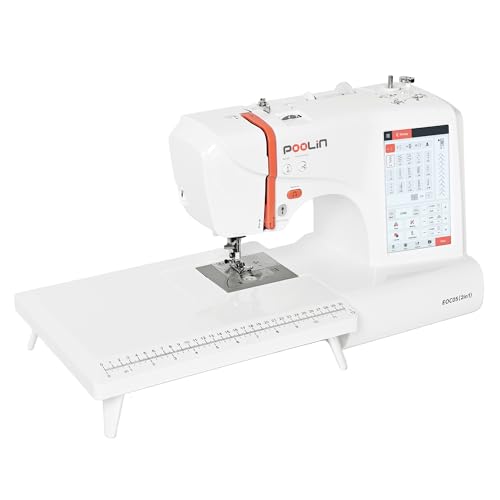
Topping our list is the POOLIN EOC05 — a practical embroidery machine for those who value simplicity, ease of use, and affordability. As a home embroidery machine, it’s particularly appealing to beginners or hobbyists who want to make personalized clothing, gifts, or decorative fabric pieces without investing in a heavy-duty professional machine.
What makes POOLIN EOC05 stand out is its focused design: it includes just the essential embroidery functions (hoop, basic controls, embroidery arm) without unnecessary bells and whistles. This minimalism translates into lower cost, easier learning curve, and less maintenance — ideal for users trying embroidery for the first time or those doing occasional projects.
For small- to medium-scale embroidery tasks — patches, logos, monograms, small home-decor projects — the EOC05 delivers the core functionality reliably. Since it doesn’t aim for commercial-grade throughput or extensive stitch libraries, it’s often more affordable than mainstream brand machines. That makes it an excellent “first embroidery machine” or a casual-use machine for those who enjoy DIY fabric customising.
If you’re not planning heavy-duty work but want dependable embroidery for personal projects, POOLIN EOC05 offers great value and simplicity, which is exactly why it earns the number one spot in this guide.
Conclusion
Choosing the right embroidery machine depends heavily on your needs: are you a beginner experimenting with small patches, a home hobbyist customizing apparel, or an experienced sewist demanding power and flexibility? Among the five machines reviewed here, the POOLIN EOC05 stands out for beginners and casual crafters thanks to its simplicity and value; the POOLIN EOC06 and Brother LB5500 offer a step up in capability without overcomplicating things. The Brother SE700 impresses as an all-in-one sewing and embroidery combo — ideal if you want flexibility and wireless design transfers. Meanwhile, the Singer 9960 excels at heavy-duty sewing and decorative stitching, though it isn’t a dedicated embroidery machine.
Ultimately, the “best” embroidery machine is the one that matches your projects, budget, and comfort level with technology. If you’re just starting out, go for simplicity and affordability. If you plan to grow into more complex or frequent embroidery, consider a more feature-rich machine. Whichever you choose, these machines can unlock a world of custom textile creativity — transforming plain fabrics into personalized, handcrafted creations.